

It's the question we're asked more than any other, and the honest answer is that there isn't one best driveway surface for every home. The right choice depends on your budget, the look you want, how much upkeep you're happy with, what you park on it and how the rain will drain away. Because we lay every common surface across Sheffield and South Yorkshire, we don't have a favourite to push. This guide sets out how the main options compare, so you can narrow it down before you get quotes.
The main driveway surfaces at a glance
| Surface | Best for | Upkeep | Drains through? |
|---|---|---|---|
| Resin bound | A smooth, modern finish with little maintenance | Low | Yes, on a permeable base |
| Block paving | Busy drives, patterns and easy repairs | Medium | Only permeable block paving |
| Tarmac | Good value on larger, straightforward drives | Low to medium | No, needs drainage |
| Imprinted concrete | A patterned, hard-wearing finish | Resealing every few years | No, needs drainage |
| Plain concrete | Vans, trailers and heavy loads | Low | No, needs drainage |
| Cobbles and natural stone | Period homes and a traditional look | Medium | Depends on how it's laid |
| Gravel | The lowest cost to lay | Regular raking and topping up | Yes |
Resin bound
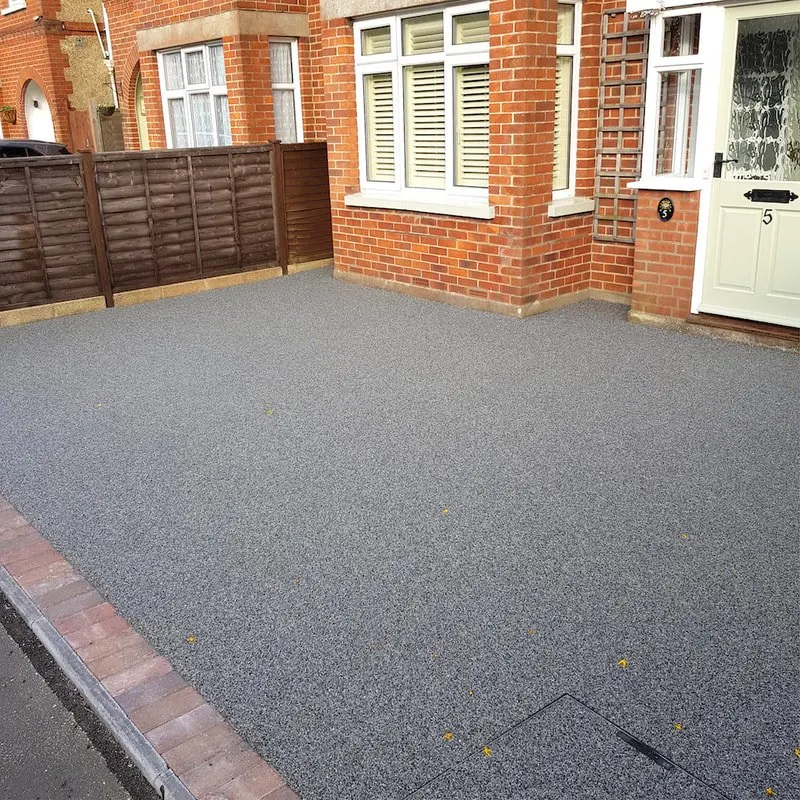
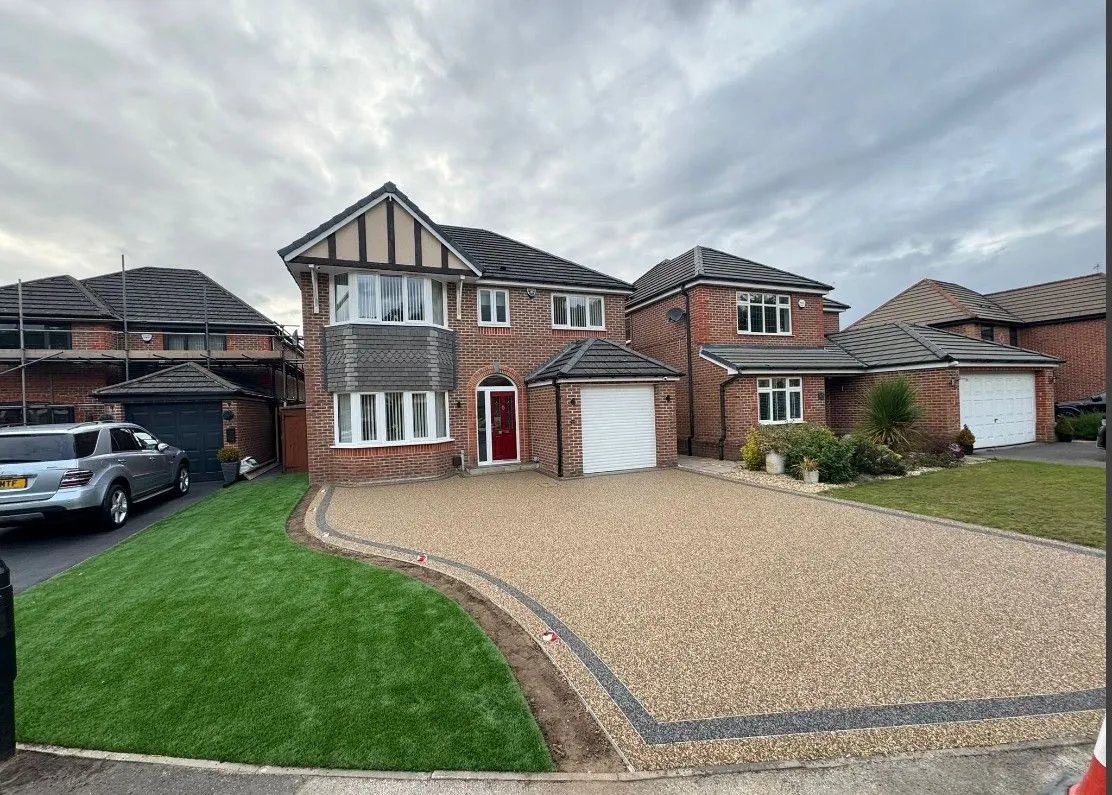
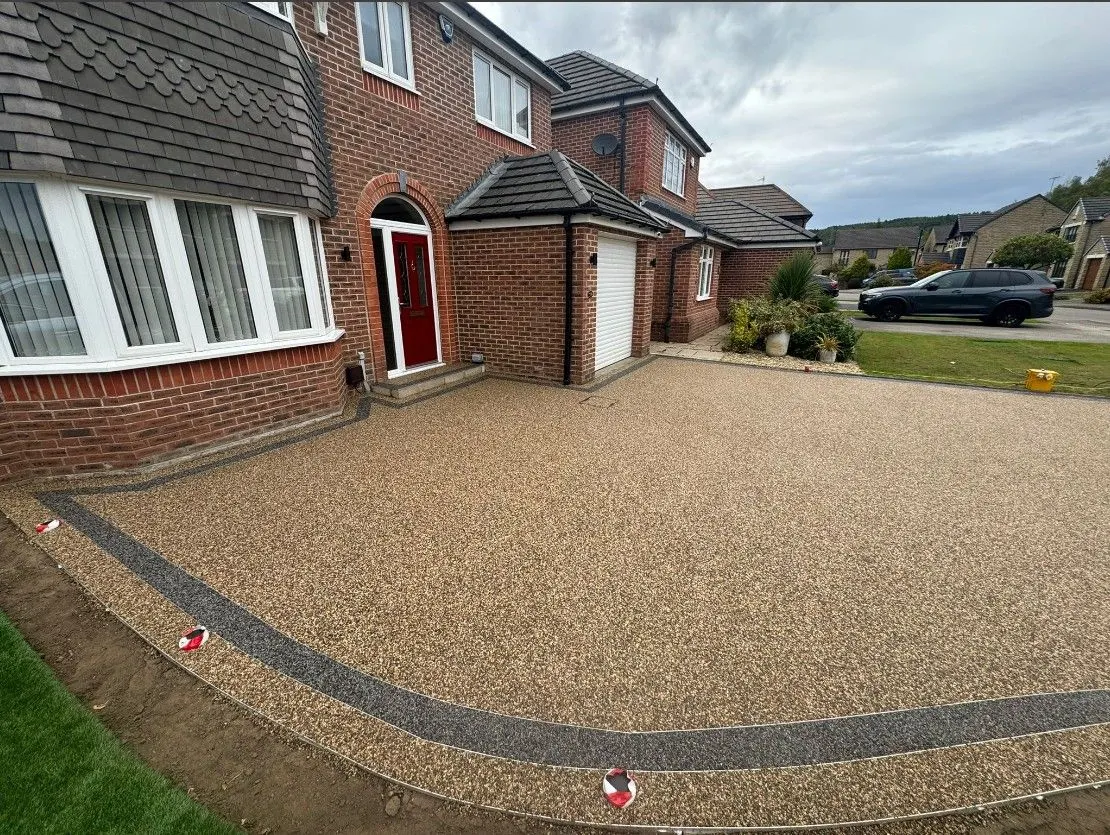
Resin bound is a mix of natural stone and clear resin, trowelled to a smooth, seamless finish. It comes in a wide range of colours, there are no joints for weeds to grow in, and when it's laid on a permeable base the rain drains straight through. It's designed for cars and light vehicles rather than heavy vans, and a repair is harder to hide than on block paving. Make sure you're being quoted for resin bound and not resin bonded, which is a coat of resin with loose stones scattered on top and doesn't drain. Our resin bound driveways page covers colours, borders and costs, and our guide to resin driveway problems explains what to watch out for.
Block paving
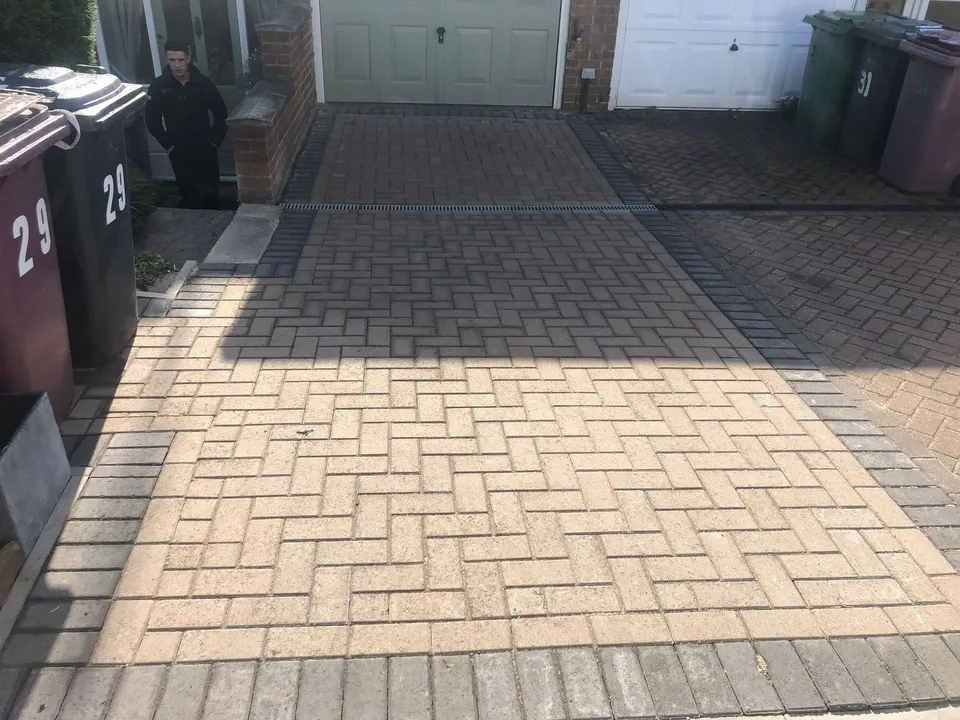
Block paving is strong, comes in endless colours and patterns, and is the easiest surface to repair, because a damaged block can be lifted out and replaced without a visible patch. It needs a little more looking after than resin, as weeds and moss can get into the joints, but a regular brush keeps it tidy. Standard block paving is laid on a compacted base and drains to a border or channel, while permeable block paving uses wider joints and an open base so the water can soak away. See our block paving driveways for designs and prices.
Tarmac
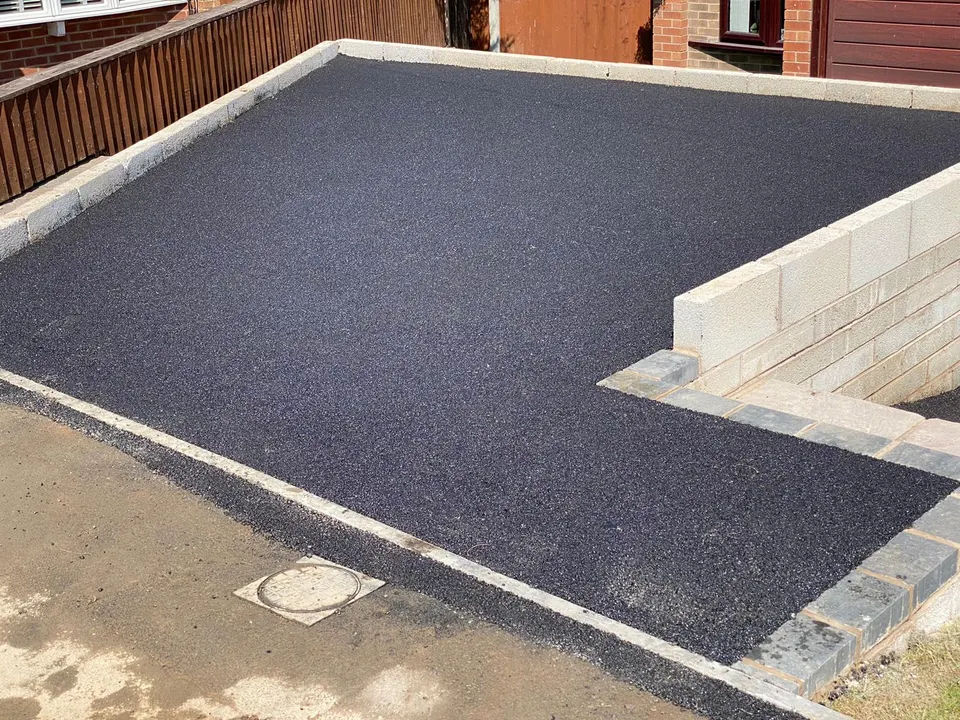
Tarmac is quick to lay and often the best value on a larger, straightforward drive. It now comes in red, buff, green and grey as well as black, and an old tarmac drive with a sound base can often be resurfaced rather than dug out. It can mark in very hot weather and isn't permeable, so it has to fall towards a border, lawn or soakaway. A block paving edge sets it off well. Read more on new and resurfaced tarmac drives, or see our tarmac vs resin comparison.
Imprinted and plain concrete
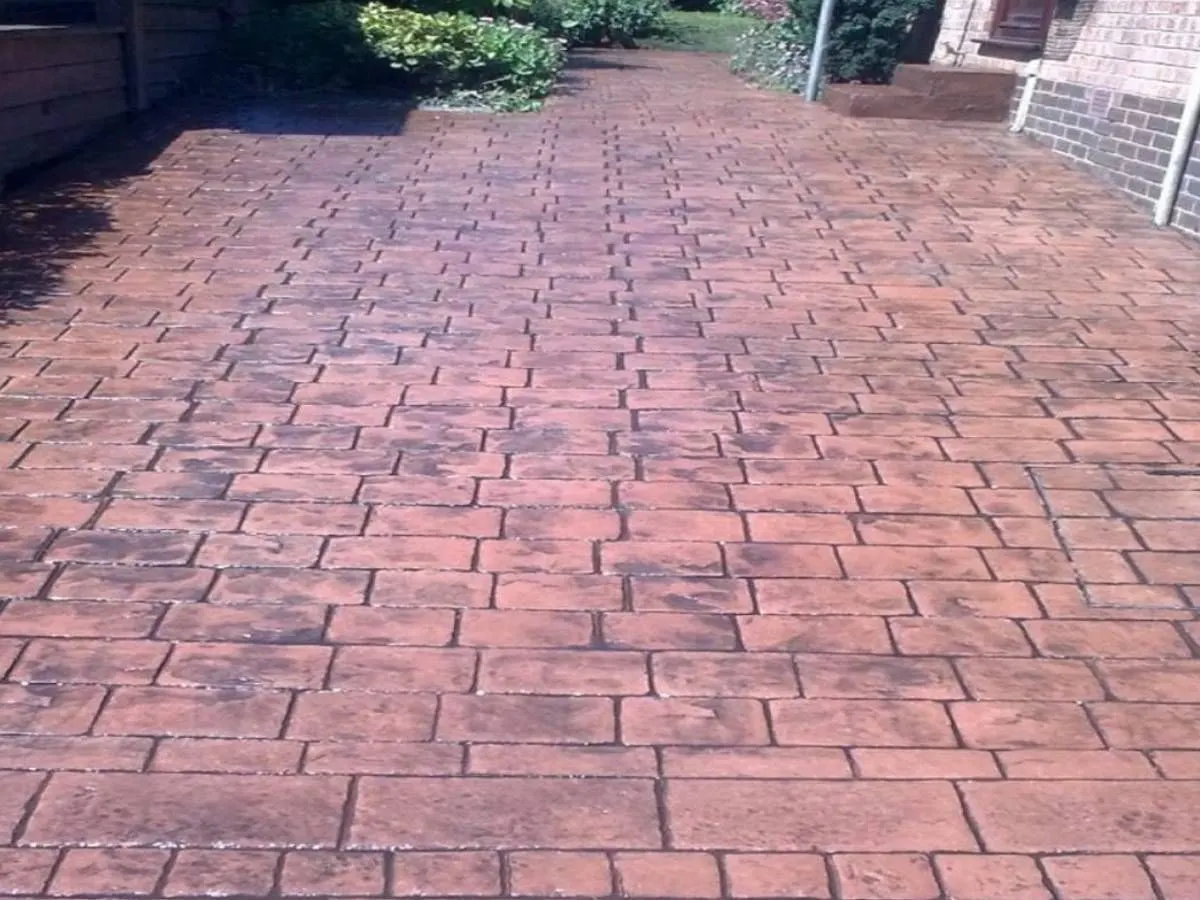
Pattern imprinted concrete is pressed with a stone, brick or cobble pattern and sealed for a glossy finish. It's very hard-wearing, but it needs resealing every few years to keep its colour, and cracks can't be replaced piece by piece. Plain brushed concrete is the plainest option to look at but one of the toughest, which makes it the usual choice where vans, trailers or a motorhome will park. Both need drainage to a border or soakaway. Compare imprinted concrete and brushed concrete drives.
Cobbles and natural stone
Granite setts, cobbles and driveway-grade Indian stone suit older and period properties and age well. They take more skill and time to lay, so they usually cost more, and the stone must be thick enough to take the weight of a car, as patio slabs won't last. Our cobbled driveways page shows a few examples.
Gravel
Gravel is the cheapest surface to lay and drains naturally, so it rarely needs planning permission. It does need raking and topping up, stones end up on the pavement and in the house, and it's hard work on a slope or with a pushchair. Laid with solid edging and stabilising grids, it behaves much better. See our gravel driveways for the details.
Drainage and planning permission
Drainage often decides the shortlist. In England, surfacing more than five square metres of a front garden needs planning permission unless the surface is permeable or the rain runs onto a lawn, border or soakaway on your own property. Resin bound on a permeable base, permeable block paving and gravel all let the water soak away. Tarmac, concrete and imprinted concrete can still be used, but the drive has to be laid to fall towards somewhere the water can go. Our guide to permeable driveways explains the options. A new dropped kerb always needs separate permission from the council.
What about slopes?
Sheffield is a hilly city, and plenty of drives here are steep. Gravel moves downhill and block paving isn't suited to steep inclines, while tarmac, brushed concrete and resin bound can all be laid on a slope with the right falls and drainage at the bottom. We look at the gradient on every survey and tell you honestly which surfaces will work.
What affects the cost?
As a rough order, gravel is the cheapest to lay, tarmac and block paving sit in the middle depending on the size of the drive, and resin, imprinted concrete and natural stone usually cost more. The surface is only part of the price, though. Digging out, the sub-base, levels, drainage, edging and any walls often make more difference than the finish on top, which is why we price every drive after a free survey.
So which driveway surface should you choose?
- Least upkeep: resin bound.
- Easiest to repair, or a unique pattern: block paving.
- Good value on a big drive, or refreshing an old one: tarmac.
- Vans and heavy vehicles: brushed concrete or block paving.
- A period home: cobbles, setts or natural stone.
- The tightest budget: gravel, laid with proper edging.
- No drainage work or planning worries: a permeable surface.
Many of the drives we lay mix surfaces, such as resin with a block paving border or tarmac with a cobble sett edge, which can give you the best of both.
Already have a driveway?
A new drive isn't always the answer. Sunken blocks, potholes and cracks can often be put right with a driveway repair, and a tired surface can look very different after professional cleaning and sealing. We'll tell you if repairing makes more sense than replacing.
Get honest advice on your drive
We've been laying driveways across Sheffield and South Yorkshire since 2011, and we're happy to price two or three surfaces side by side so you can compare. For a free, price-guaranteed quote, call 0114 551 7111 or send us your details.